MyPsychSim
Immersive Learning Lab
Where Organizational Psychology Meets Real Practice
MyPsychSim puts you inside living, AI-driven organizations where you practice diagnosis, change management, and intervention under real pressure, before your first real client walks through the door.
Already a member?
Sign in to access your simulations, progress, and reflections.
"The gap between knowing and doing is where most practitioners get lost. MyPsychSim is built for that gap, the only place where practice turns theory into skill."
Dr. Preston V. L. Lindsay, PhD, Founder and CEO, MyPsychSim
MyPsychSim
Immersive Learning Lab
Two forces that reshape human systems. Unified in a single mark.
The MyPsychSim logo is not decorative. It is a thesis. At its center is the convergence of two transformative forces that are redefining what it means to understand and change human organizations: applied psychological science and artificial intelligence.
Psychological science gives us the frameworks to decode behavior, culture, power, and systems. AI gives us the computational capacity to model their infinite complexity: to simulate the unpredictable, to hold thousands of variables in dynamic tension, to respond as real stakeholders do. Separately, each is powerful. Together, they produce something that has never existed before: a living laboratory for organizational practice.
A century of theory on how people think, feel, resist, and change, applied not as abstraction but as immersive, pressured practice inside reactive human systems.
Adaptive, generative intelligence that can embody a resistant VP, simulate cultural inertia, and provide precision-mapped competency feedback in real time.
"The logo asks a single question: what becomes possible when the deepest science of human behavior meets the most powerful tool humanity has ever built? MyPsychSim is the answer."
Practice That Textbooks Can't Give You
MyPsychSim bridges the gap between knowing organizational psychology and being able to actually practice it.
Practice diagnosis inside living, reactive organizations before your first real client
Navigate political dynamics, hidden agendas, and resistant stakeholders
Burke-Litwin, Weisbord, Lewin, and other OP frameworks under pressure
Receive AI-generated competency feedback after every simulation
Build a reflective practice habit grounded in structured debrief
Work alone or in team mode for group learning and class debriefs
Apply psychometrics and applied statistics to real organizational data scenarios
Navigate Diversity, Equity, and Inclusion dynamics inside complex organizational systems
Assess and intervene in organizational culture and climate challenges
Built on Four Uncompromising Pillars
Designed around the core competencies that distinguish exceptional organizational psychologists from merely adequate ones.
Diagnostic Immersion
Step inside a living organization. Interview stakeholders, surface hidden dynamics, and practice the craft of organizational diagnosis in real time.
Systems Complexity
Encounter the messy, non-linear reality of organizational systems, where every intervention has unintended consequences and leverage points are rarely obvious.
Political Realism
Navigate real stakeholder dynamics: hidden agendas, competing interests, resistance to change. The invisible curriculum that no textbook teaches.
Reflective Practice
Every simulation ends in structured debrief and AI-generated feedback mapped to competency frameworks used in the professional field.
The Simulation Market Missed Organizational Psychology
The market for AI-powered training simulations is growing, but almost nothing is built for the deep theory of organizational psychology.
Most simulation platforms sit firmly in the territory of leadership development, communication skills, or business strategy. They are useful for what they do. But they were not designed to model the phenomena that organizational psychologists actually work with: team cognition, power dynamics, organizational culture, motivation systems, group trauma, and and the invisible architecture of how organizations think and fail.
Leadership & Soft-Skills Platforms
- Focus on individual communication and presence
- Generic management scenarios with no org-psych theory
- Feedback mapped to behavioral competencies, not OP frameworks
- No modeling of culture, collective dynamics, or systemic forces
Business & Strategy Simulations
- Model markets, operations, and financial decisions
- Human systems are reduced to simple levers or ignored entirely
- No stakeholder psychology, hidden agendas, or political dynamics
- Org behavior treated as backdrop, not the central variable
What was missing
No platform was purpose-built to simulate the phenomena that define organizational psychology as a discipline: how culture shapes behavior, how power distributes and distorts, how teams think and misthink collectively, how organizational trauma perpetuates itself, and how change interventions succeed or collapse under the weight of human complexity. PsychSim fills that gap, grounded in the theoretical frameworks that OP practitioners actually use.
Even the Best Programs Leave a Critical Gap
Leading grad programs deliver excellent conceptual training. But experiential practice, the kind that builds real practitioner capability, is nearly absent.
Graduate Programs
- Case studies are static; students analyze, never act
- Role-plays are brief, low-stakes, and lack systemic complexity
- Feedback is delayed and often lacks diagnostic precision
- Little exposure to real organizational politics and hidden agendas
Business Case Publishers
- Cases are retrospective; outcomes are already known
- Designed primarily for business strategy, not organizational psychology
- No dynamic stakeholder interaction or real-time feedback loops
- Limited coverage of OD frameworks like Burke-Litwin or Weisbord
Executive Education Programs
- Systems thinking taught theoretically, rarely practiced experientially
- Simulations focus on market/financial dynamics, not human systems
- High cost and low accessibility for emerging practitioners
- No immersive practice in change management or culture diagnosis
These are not failures of intelligence or intention; they are structural limitations. No static case study can replicate the anxiety of walking into a resistant organization. No textbook can teach you to read a room, navigate hidden agendas, or hold the systemic view while a CEO is demanding quick fixes. That requires practice. That requires immersion. That requires MyPsychSim.
Designed with organizational psychology graduate students at its core
MyPsychSim is a powerful training ground for any practitioner or student who works inside human systems.
If your work touches how organizations function, how people behave within them, or how change happens inside them, this platform was built for you.
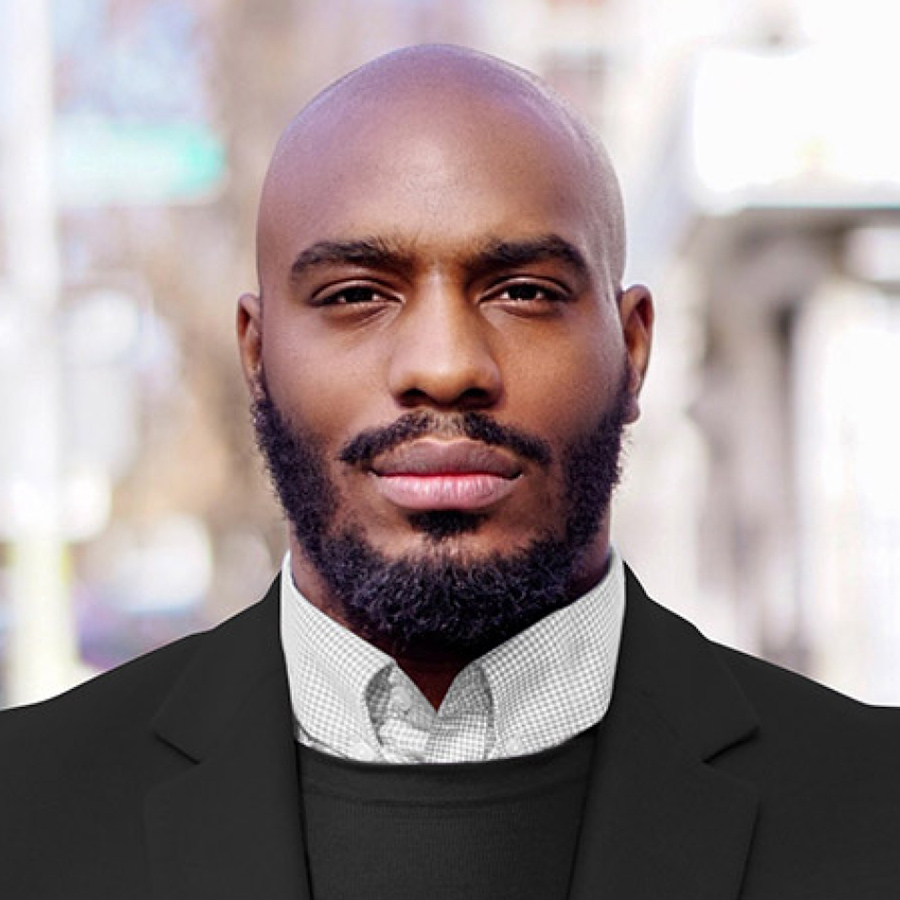
Dr. Preston V. L. Lindsay, PhD
Founder, MyPsychSim | Organizational Psychologist | Affiliated Faculty, UPenn LPS
At the heart of Dr. Preston V. L. Lindsay's work lies a simple but radical conviction: understanding organizations is not a passive intellectual exercise. It demands immersion, pressure, and the willingness to be wrong in front of real stakeholders. For over a decade, he has built his career on that principle, serving as both scholar and practitioner, teaching at elite institutions while simultaneously running a thriving consulting practice.
Through The Lindsay Group Co., his consulting practice, Dr. Lindsay works directly with organizations navigating the most difficult human challenges: leaders wrestling with organizational trauma, executives stalled by hidden power dynamics, and teams fractured by systemic dysfunction. This dual life, with one foot in the classroom and one foot in the boardroom, has given him an unforgiving clarity. There is a chasm between what students learn in theory and what practitioners must navigate in reality.
As an organizational psychologist, his research focuses on organizational trauma, how destructive leadership, chronic stress, and structural oppression embed themselves as invisible patterns of dysregulation. His interventions integrate systems thinking, Black feminist thought, and cognitive neuroscience into frameworks for genuine organizational repair. Through his teaching at leading graduate programs in organizational psychology and organizational dynamics, he has watched brilliant doctoral students graduate fluent in theory but unprepared for the volatility, politics, and human complexity of a real organization in crisis.
MyPsychSim is where his dual expertise converges: the rigorous theory of the academy and the hard-won wisdom of the consulting trenches. It is his answer to the question that has haunted him for years: How do we build practitioners who can actually do the work?
The Next Generation of OP Starts Here
PsychSim is not just a training tool. It is a declaration that organizational psychologists deserve the same quality of immersive practice that pilots get in flight simulators, surgeons get in surgical labs, and soldiers get in combat simulations. The organizations of the future need practitioners who have already been tested. Come get tested.
Enter a Simulation