 Translate

MyPsychSim
Immersive Learning Lab
Practitioner Toolkit
Comprehensive practitioner guides for diagnostic tools, organizational theories, systems thinking, DEI, psychometrics, and multicultural OD. Click any entry for full application detail.
Category
37 entries across all areas of practice. Click any card for full detail, application steps, and key questions.

McKinsey 7-S Framework
Analyzes seven interconnected organizational elements to diagnose misalignment and guide change.
Tom Peters & Robert Waterman (McKinsey & Co.), 1980
Diagnostic Tools

Burke-Litwin Causal Model
A 12-factor model distinguishing transformational from transactional drivers of organizational performance.
W. Warner Burke & George H. Litwin, 1992
Diagnostic Tools

Weisbord's Six-Box Model
A practical entry-level diagnostic examining six organizational domains through formal and informal lenses.
Marvin Weisbord, 1976
Diagnostic Tools

Nadler-Tushman Congruence Model
Diagnoses organizational performance through the fit between four key components: Work, People, Structure, and Culture.
David Nadler & Michael Tushman, 1980
Diagnostic Tools

Force Field Analysis
Maps driving and restraining forces around a proposed change to identify the most leveraged interventions.
Kurt Lewin, 1947
Diagnostic Tools

Cultural Web
Maps six cultural artifacts around a central paradigm to reveal the taken-for-granted assumptions shaping behavior.
Gerry Johnson & Kevan Scholes, 1992
Diagnostic Tools

Lewin's Change Model
Three-stage model — Unfreeze, Change, Refreeze — describing how stable systems move to new equilibria.
Kurt Lewin, 1947
Theories & Concepts

Kotter's 8-Step Change Model
A sequential leadership-driven model for managing large-scale organizational transformation.
John P. Kotter, Harvard Business School, 1996
Theories & Concepts

Organizational Learning & Double-Loop Theory
Single-loop learning corrects errors; double-loop learning questions the governing values that produced the error.
Chris Argyris & Donald Schön, 1978
Theories & Concepts
Psychodynamic Approaches to Organizations
Applies psychoanalytic concepts — unconscious anxiety, group dynamics, social defenses — to understand organizational behavior.
Wilfred Bion, Isabel Menzies Lyth, Harold Bridger, 1940s–1990s
Theories & Concepts

Motivational Theories in Organizations
Maslow, Herzberg, and Self-Determination Theory — three frameworks explaining what drives human performance and engagement.
Abraham Maslow (1943), Frederick Herzberg (1959), Deci & Ryan (1985)
Theories & Concepts

Systems Thinking Fundamentals
A discipline for seeing wholes — understanding interrelationships, feedback, and time delays that produce complex behavior.
Jay Forrester (1961), Peter Senge (1990), Donella Meadows (2008)
Systems Thinking

Feedback Loops: Reinforcing & Balancing
The two fundamental building blocks of all system behavior — loops that amplify change and loops that resist it.
Jay Forrester, 1961 — foundational to System Dynamics
Systems Thinking

Systems Archetypes
Common recurring system structures — Fixes That Fail, Shifting the Burden, Limits to Growth — that produce predictable problematic behavior.
Peter Senge & Daniel Kim, popularized in The Fifth Discipline (1990)
Systems Thinking
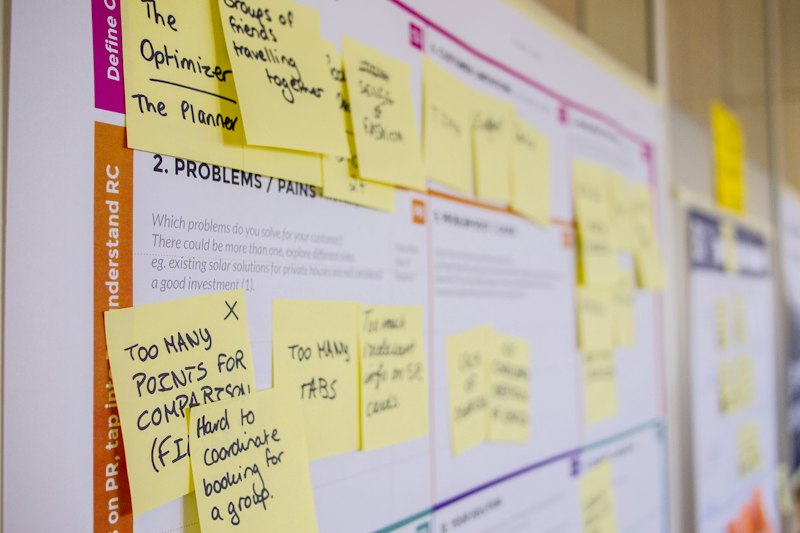
Causal Loop Diagrams (CLDs)
Visual maps of cause-and-effect relationships and feedback loops, making mental models visible and shareable.
Developed within System Dynamics — Jay Forrester, MIT, 1960s
Systems Thinking

Stakeholder Mapping & Analysis
A systematic method for identifying, categorizing, and strategically engaging all parties affected by or influential in an organizational change.
R. Edward Freeman (1984); refined across OD and project management practice
Org Change & Diagnosis

Causal Loop Diagramming in OD Practice
Applying CLD methodology to organizational diagnosis — mapping the feedback structures that sustain dysfunction and identifying high-leverage intervention points.
Applied Systems Dynamics tradition; Sterman (2000), Senge (1990), Meadows (2008)
Org Change & Diagnosis

ADKAR Change Model
A results-oriented change management model focused on individual transitions: Awareness, Desire, Knowledge, Ability, Reinforcement.
Jeff Hiatt, Prosci, 1994 (model formalized in Hiatt, 2006)
Org Change & Diagnosis

Appreciative Inquiry (AI)
A strengths-based approach to organizational change that builds on what is already working rather than diagnosing and fixing deficits.
David Cooperrider & Suresh Srivastva, Case Western Reserve University, 1987
Org Change & Diagnosis

Prosci Change Management Methodology
An integrated, research-based approach connecting organizational change management with project management to drive adoption and usage.
Prosci Inc. / Jeff Hiatt, 1994–present (based on benchmarking research across 3,000+ change projects)
Org Change & Diagnosis

Whole Systems Approaches: Open Space & Future Search
Large-group methods that engage the 'whole system in the room' to generate energy, alignment, and self-organized action around complex challenges.
Harrison Owen (Open Space, 1985); Marvin Weisbord & Sandra Janoff (Future Search, 1992)
Org Change & Diagnosis

DEI Foundations: Diversity, Equity & Inclusion
Diversity is presence, equity is fairness of process and outcome, inclusion is belonging. Each requires different interventions.
Developed across multiple scholars — Kimberlé Crenshaw, bell hooks, Patricia Hill Collins, and the broader DEI field
DEI

Unconscious Bias: Theory & Practice
Automatic mental shortcuts that influence decisions outside conscious awareness — and what organizations can actually do about them.
Project Implicit — Mahzarin Banaji & Anthony Greenwald (1998); Patricia Devine (1989)
DEI

Intersectionality
Kimberlé Crenshaw's framework: social identities overlap and compound, creating qualitatively distinct experiences of privilege and marginalization.
Kimberlé W. Crenshaw, UCLA/Columbia Law School, 1989
DEI

Psychological Safety
Amy Edmondson's concept: the shared team belief that interpersonal risk-taking is safe — enabling learning, voice, and candor.
Amy C. Edmondson, Harvard Business School, 1999
DEI

Inclusive Leadership
Six behavioral clusters that active cultivate belonging, amplify marginalized voices, and challenge exclusionary norms.
Deloitte Insights, Christie Smith & Stephanie Turner, 2014; Bourke & Titus (2019)
DEI

Structural Racism & Systemic Inequity in Organizations
Racism and inequity embedded in organizational policies, practices, norms, and cultures — operating without individual racist intent.
Eduardo Bonilla-Silva (2006), Ibram X. Kendi (2019), Robin DiAngelo (2018)
DEI

Multicultural Organization Development (MCOD) Framework
Jackson & Holvino's developmental model describing how organizations evolve from monocultural to fully multicultural — and the OD interventions that move them forward.
Bailey W. Jackson III & Evangelina Holvino, 1988; extended by Jackson (2006)
Multicultural & Antiracist OD

Social Identity Development Theory
Janet Helms and William Cross's models of racial identity development — and why practitioner self-knowledge is foundational to multicultural OD work.
William E. Cross Jr. (1971, Black identity); Janet Helms (1984, White identity); extended by many scholars
Multicultural & Antiracist OD

Cultural Humility vs. Cultural Competence
Moving beyond fixed 'competence' toward ongoing self-examination, power-awareness, and openness to being taught by those whose cultures differ from your own.
Melanie Tervalon & Jann Murray-García (1998); applied to OD by Hook, Davis & colleagues
Multicultural & Antiracist OD

Validity: The Foundation of Assessment
Validity is the degree to which an assessment measures what it is intended to measure — the most fundamental psychometric property for any organizational test or survey.
American Psychological Association (AESA Standards); Messick (1989); Kane (2013)
Psychometrics

Reliability: Consistency of Measurement
Reliability is the consistency and stability of an assessment — the degree to which scores are free from random measurement error.
Spearman (1904) — classical test theory foundations; Cronbach (1951) — coefficient alpha
Psychometrics

Adverse Impact & the 4/5ths Rule
The legal and psychometric standard for detecting and evaluating differential selection rates across demographic groups in employment decisions.
EEOC Uniform Guidelines on Employee Selection Procedures (1978); Cascio & Aguinis (2011)
Psychometrics
Personality Assessment in Organizations
The Big Five model, occupational personality scales, and the evidence for and against personality assessment in organizational decision-making.
Costa & McCrae (1992) — NEO-PI-R; Hogan (1994) — occupational personality; Barrick & Mount (1991) — meta-analytic review
Psychometrics

Cognitive Ability Testing: Validity, Adverse Impact, and Ethical Use
The empirical case for cognitive ability as the strongest single predictor of job performance — and the persistent adverse impact challenge that makes it ethically and legally complex.
Schmidt & Hunter (1998) — meta-analysis; Gottfredson (1997); Sackett et al. (2008)
Psychometrics
Multisource (360-Degree) Feedback: Design, Use, and Misuse
The theory, design requirements, and ethical boundaries of 360-degree feedback systems — and how to distinguish valid developmental use from harmful evaluative misuse.
Lepsinger & Lucia (1997); Bracken & Rose (2011); London & Beatty (1993)
Psychometrics
Situational Judgment Tests (SJTs)
Work-sample-like assessments presenting realistic job scenarios — balancing predictive validity, face validity, and reduced adverse impact compared to cognitive ability tests.
McDaniel et al. (2001) — meta-analysis; Ployhart & Ehrhart (2003); Christian et al. (2010)
Psychometrics
